

Tuber panniferum Tul. & C. Tul.
Giornale Botanico italiano anno I, parte I, tomo II, 62 (1844)
Fungi hypogaei 143, Tab. III fig. III, Tab. XVII fig. IV (1851)
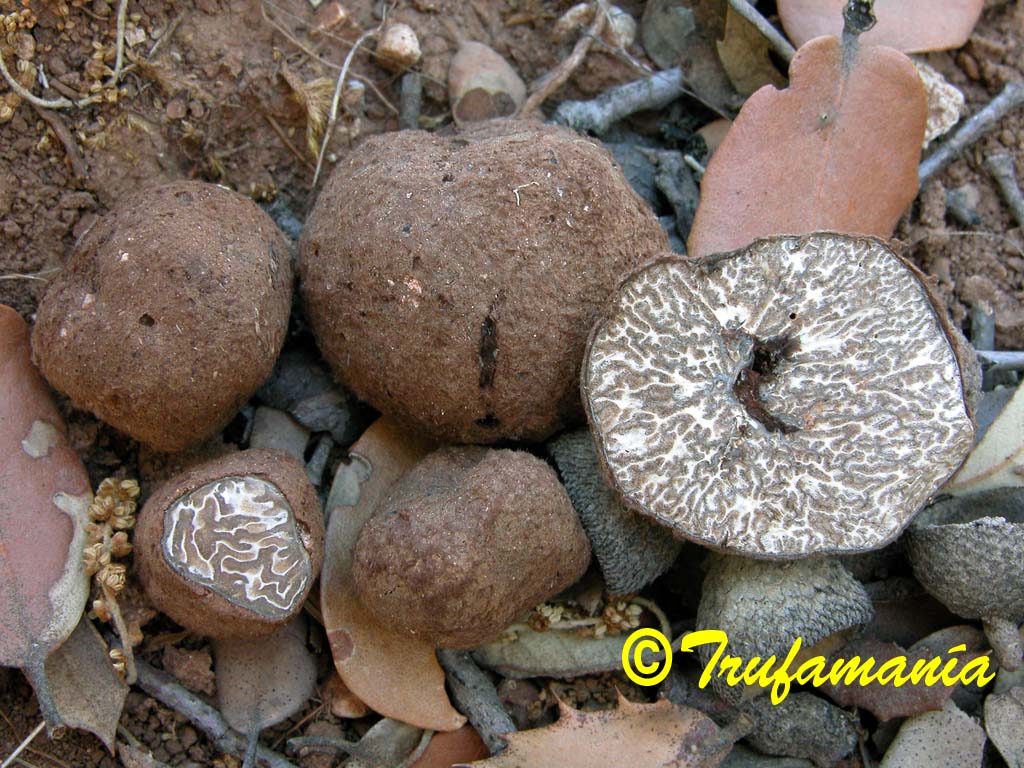
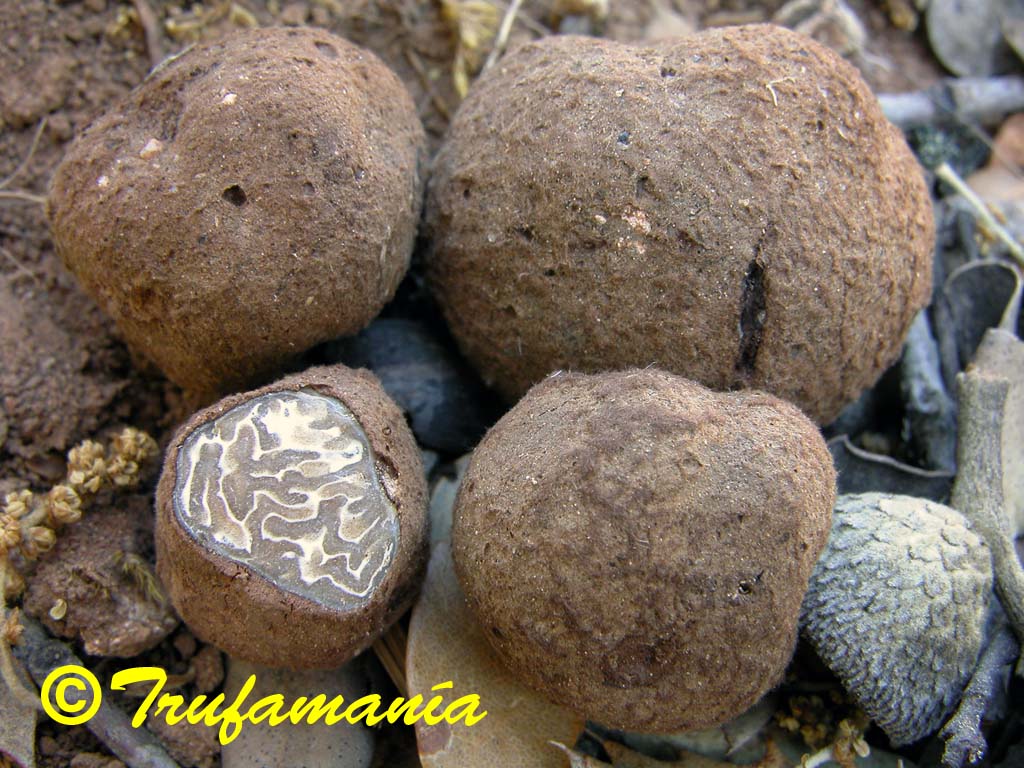
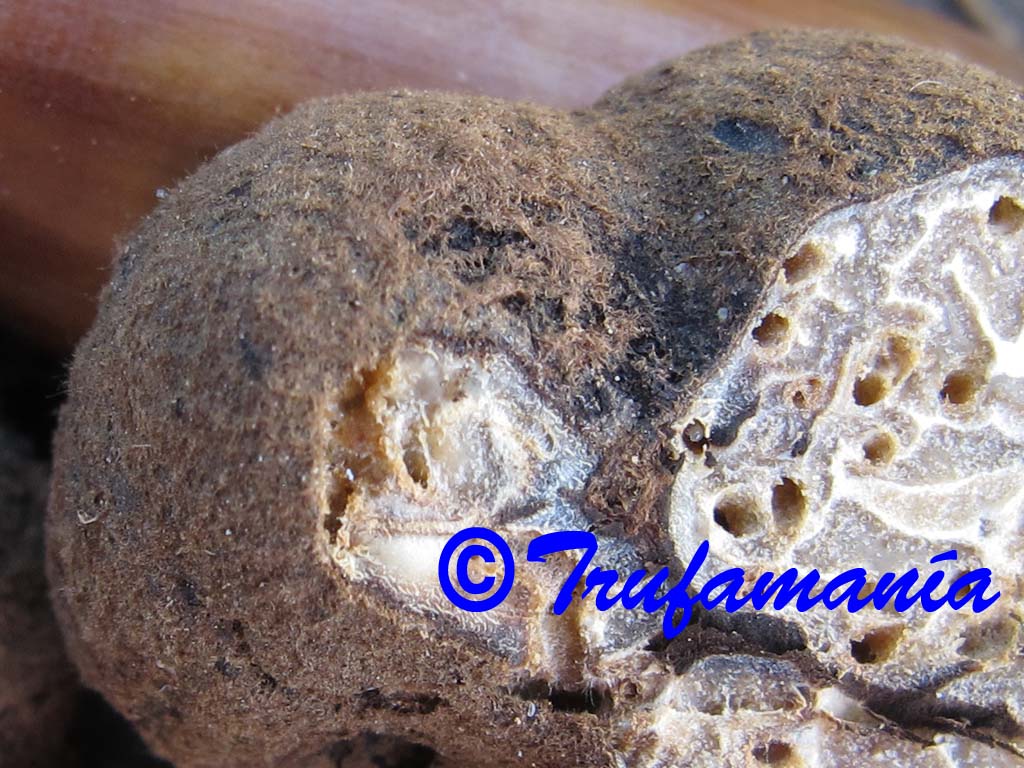
(Click on the picture to see more images)
Macroscopic characters:
Ascomata: hypogeous, subglobose, lobed, with a basal cavity often penetrating deep into the gleba, 1–4 cm across, covered with a thick, reddish brown, cottony tomentum.
Gleba: hard, solid; whitish at first, then yellowish grey, greenish grey or greyish brown, darkening at maturity, marbled with two types of numerous, branching veins: one type dark-coloured, thin and not always clearly visible, containing no air (venae lymphaticae, veines aquifères of Tulasne, venae internae of Vittadini), the other white, broad and often radiating from the base, air-bearing (air-veins, veines aérifères, venae externae).
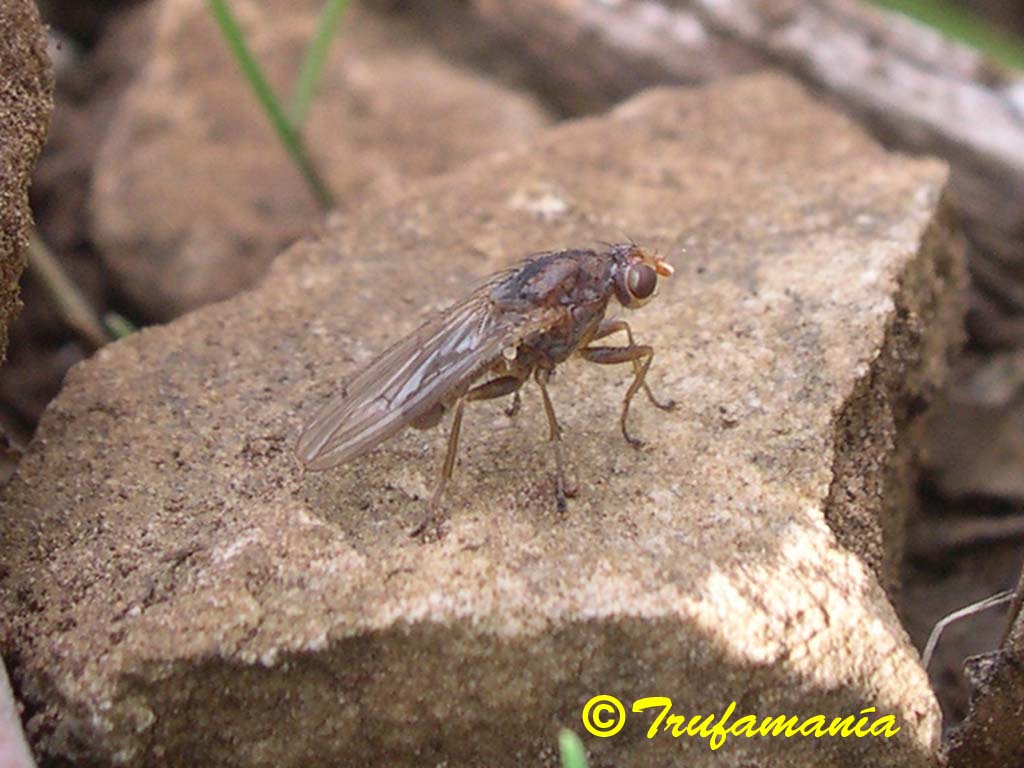
Odour: strong, truffle-like. Readily detected by truffle dogs, the truffle beetle (Leiodes cinnamomea) and truffle flies (Suillia spp.)
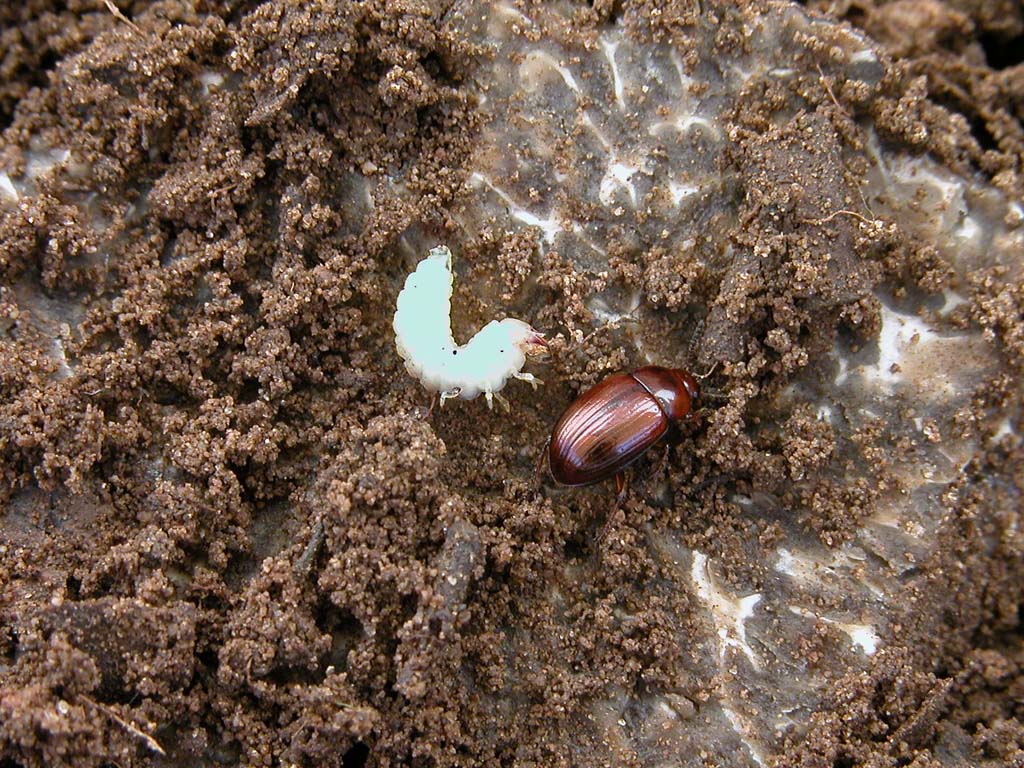
Taste: faint, reminiscent of sunflower seeds.
Habitat
A Mediterranean species of warm localities, not widely distributed. Ripening typically in autumn and winter, though specimens can be found year-round. Collected under holm oaks in sunny, calcareous situations, inhibiting plant growth and producing “burns”. Mature specimens are frequently found in June and July, sharing habitat with Tuber aestivum and Tuber nitidum.
Notes:
This species is readily identified on macroscopic grounds by its distinctive woolly felted tomentum.
(Click on the picture to see more images)
Microscopic characters:
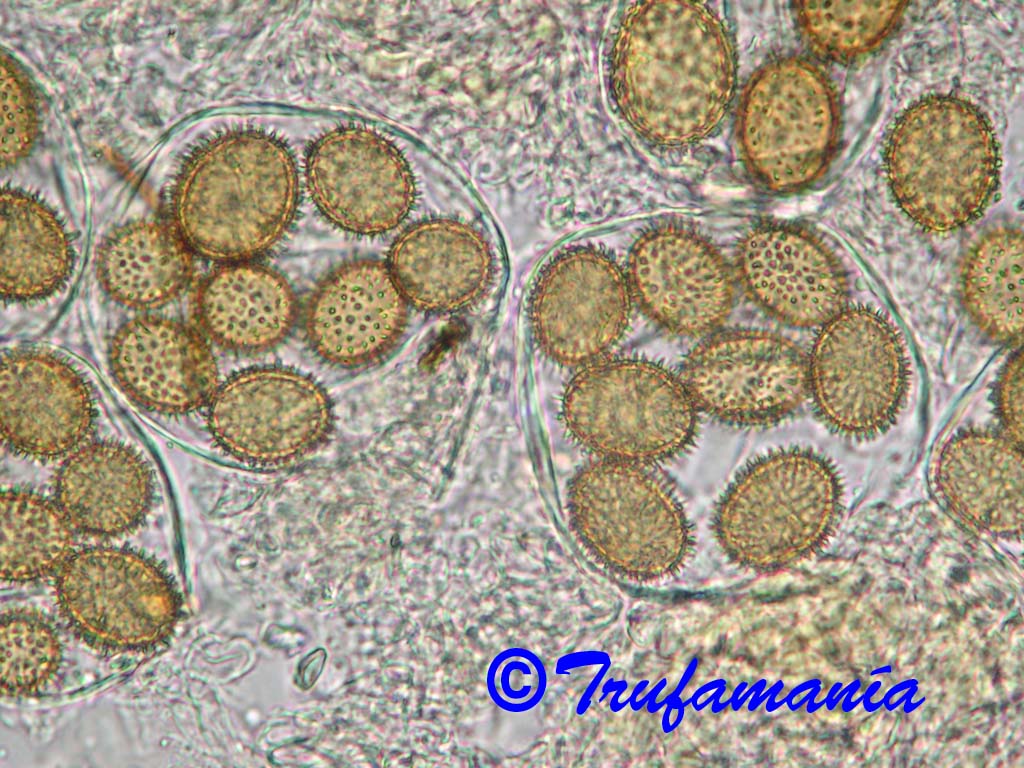
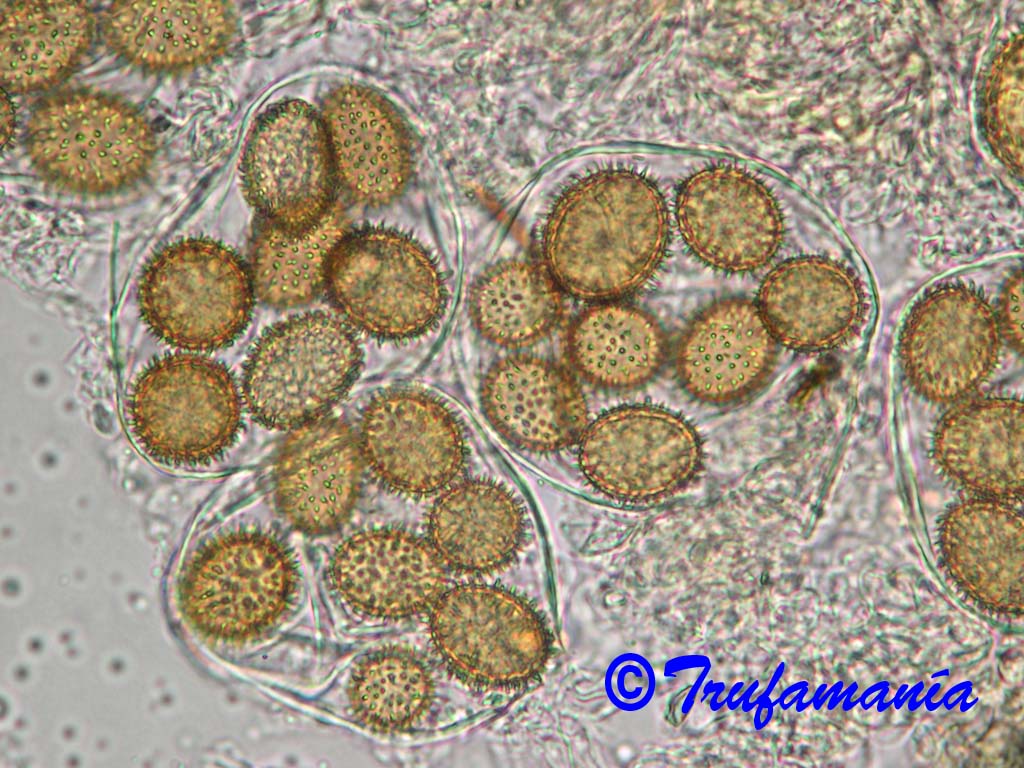
Asci: subglobose, short-stalked, 70–90 × 60–70 µm excluding stalk, 1–8-spored (usually 6–7-spored).
Ascospores: 20–26 (–40) × 16–23 (–30) µm excluding ornament, size variable depending on the number of spores per ascus, Q range = 1.11–1.33, broadly ellipsoid, yellow, translucent, ornamented with isolated conical spines 2–3 µm long.
Peridium: 250–300 µm thick, pseudoparenchymatous, composed of subglobose cells in the outermost layers, covered with a woolly tomentum of brown, thick-walled hyphae.
 |
Antonio Rodríguez trufamania@gmail.com antonio@trufamania.com ORCID iD: 0000-0002-0708-7773 |