

Terfezia claveryi Chatin
La Truffe: 74 (1892)
(Click on the picture to see more images)
Macroscopic characters:
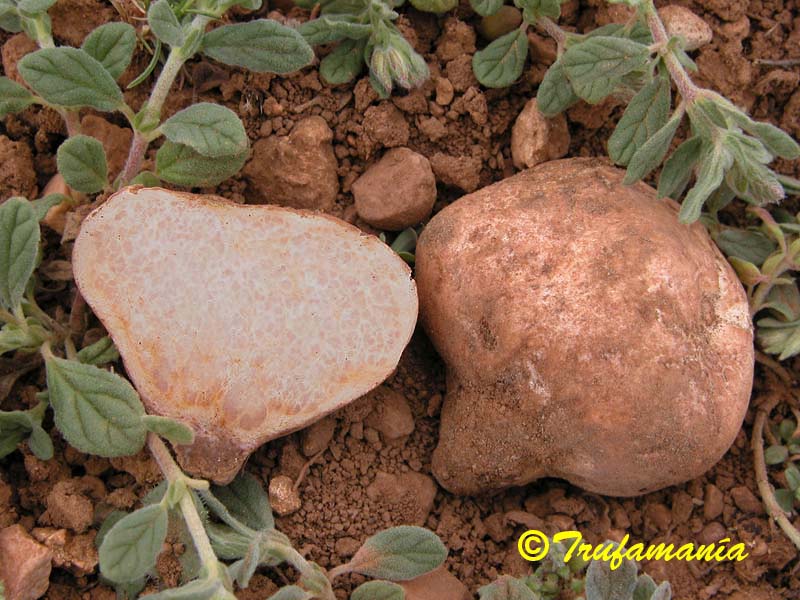
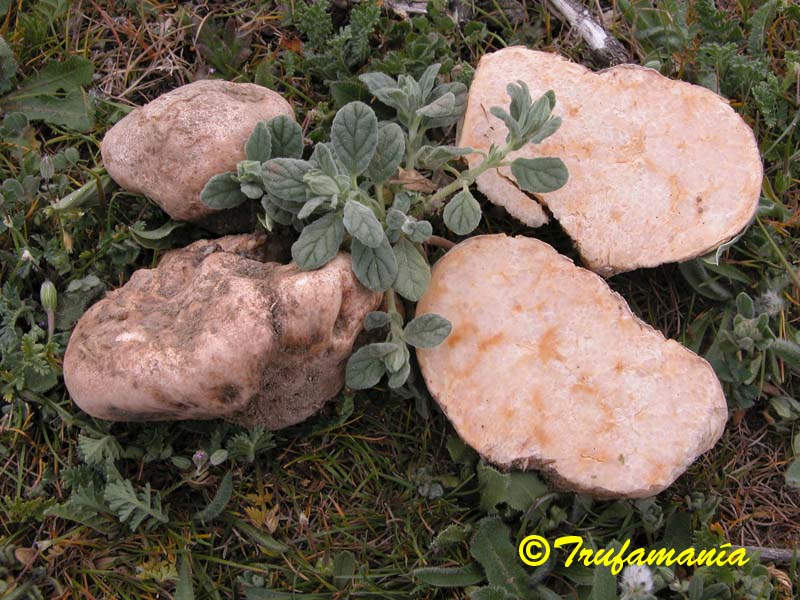
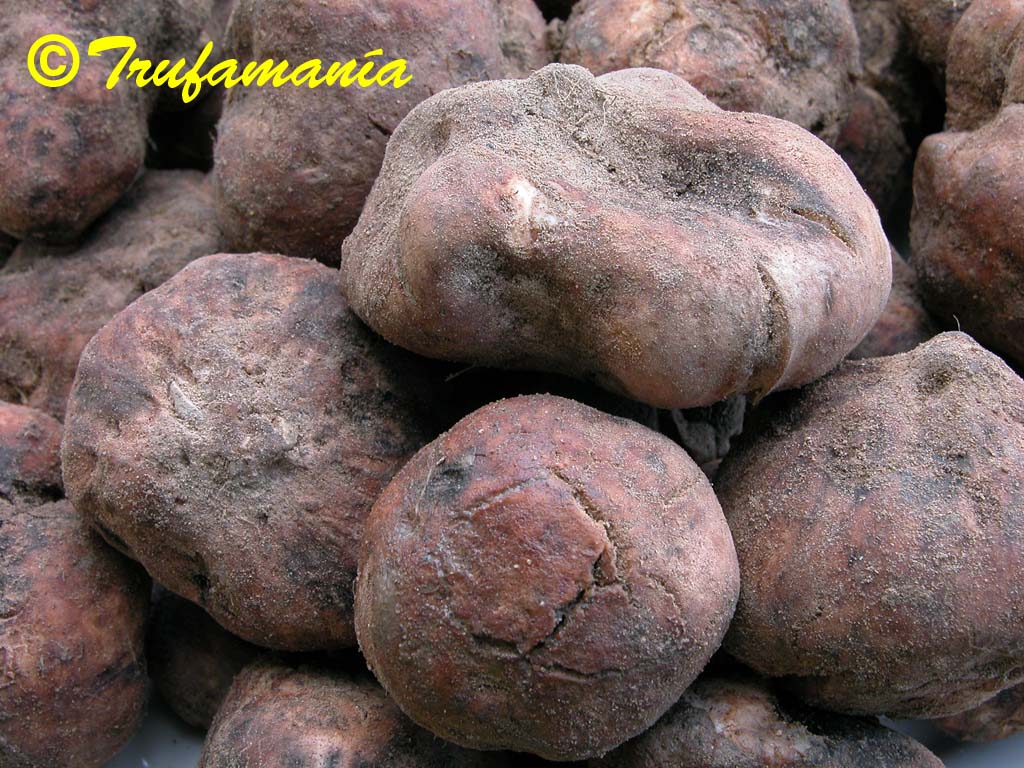
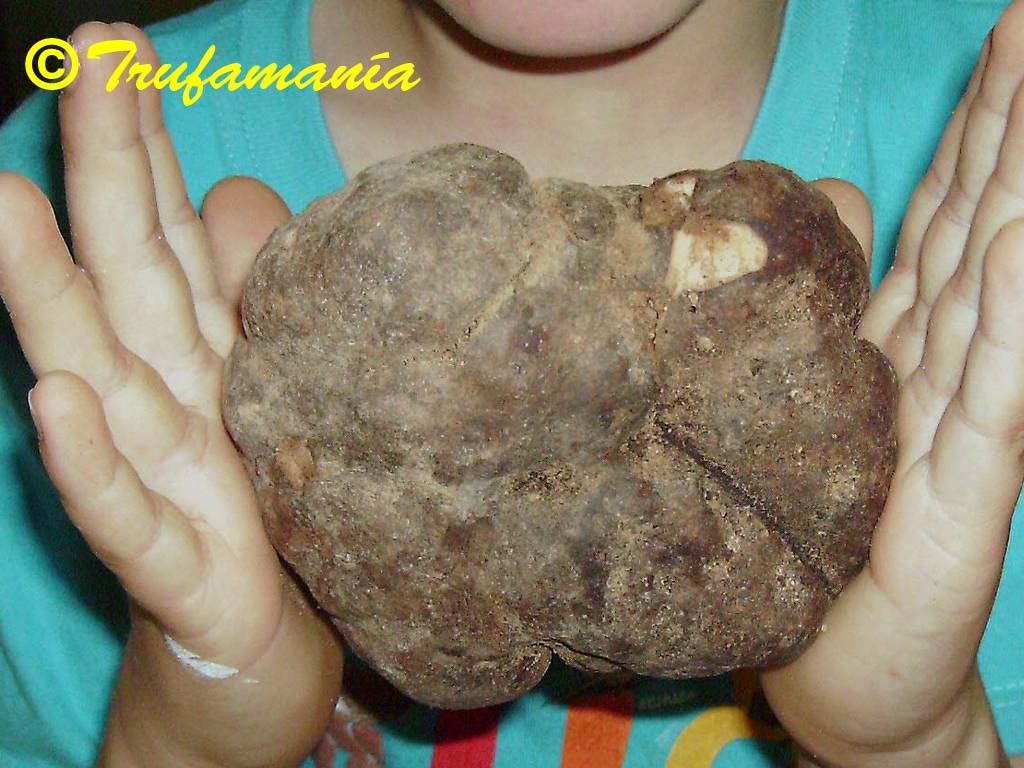
Ascomata: hypogeous to partially emergent at maturity, 3–12 cm in size, subglobose, turbinate, obpyriform, sometimes gibbous, lobed, irregular in form, often with a tapered, sterile base, ochre-salmon at first, becoming reddish-brown, blackening with age, initially smooth, but often furrowed, associated with rapid growth.
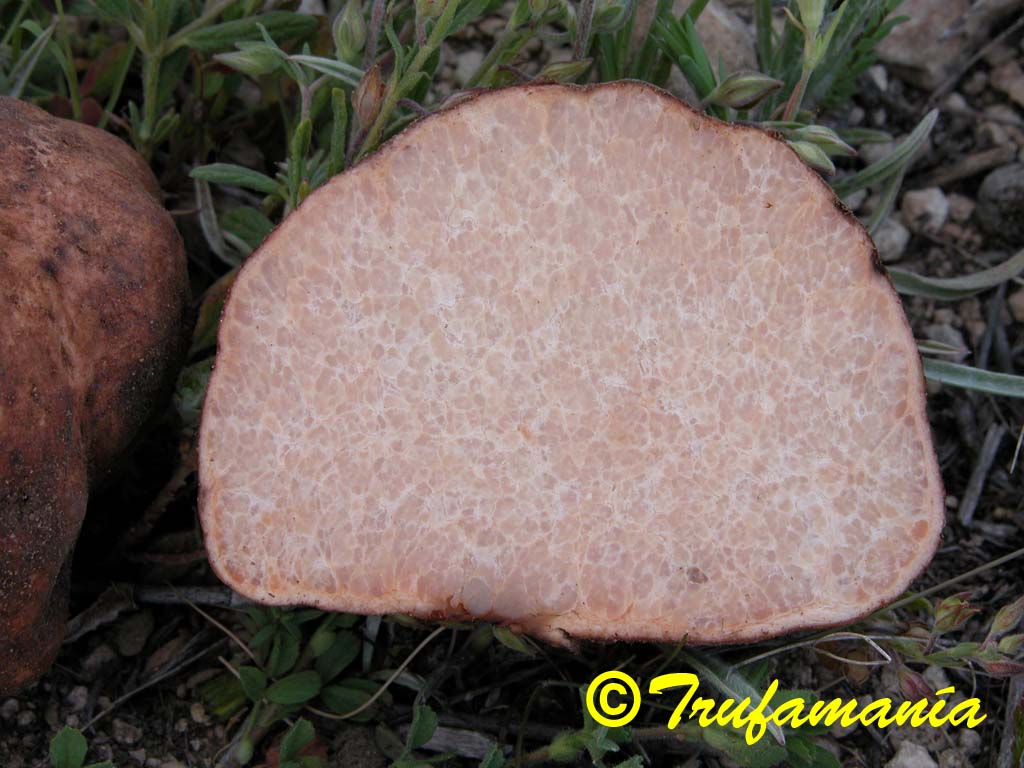
Peridium: 1–1.5(–3) mm thick, whitish-pink in cross section, composed of thin-walled hyphae, 8–20 µm broad at septa, appearing as parallel hyphae or as more or less rounded elements, depending on the section angle, hyaline in the innermost layers, yellowish with thicker walls in the outermost layers.
Gleba: solid, fleshy, succulent, whitish to pale pink at first, maturing to pink-salmon pockets of fertile tissue separated by whitish-pink sterile veins, inconspicuous at maturity, sometimes with yellowish-brown spots.
Odour: faint, not distinctive.
Taste: mild, pleasant, gastronomically prized.
Distribution, Habitat and Season:
Countries around the Mediterranean and the Middle East, limited to arid and semiarid areas, in calcareous, clayey or sandy, alkaline soils, associated with Helianthemum spp., March through May in Spain, January through March in the Middle East and North Africa. Its fruiting period is highly dependent on rainfall and temperature, and the species may be absent in years when conditions are unfavourable.
(Click on the picture to see more images)
Microscopic characters:
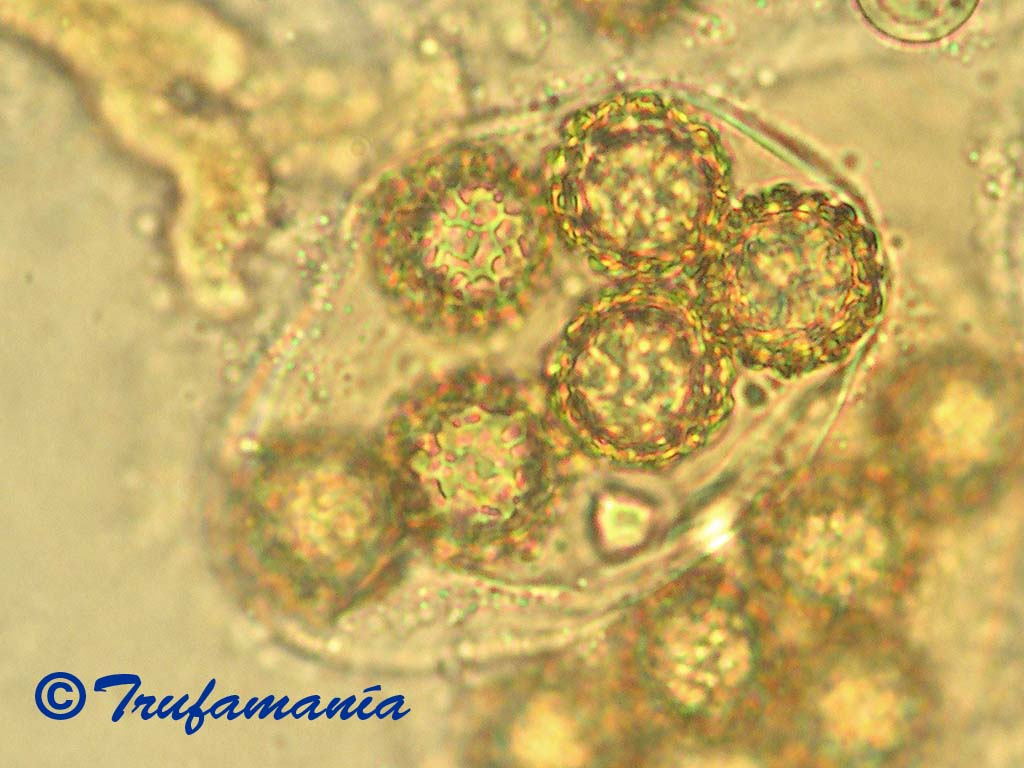
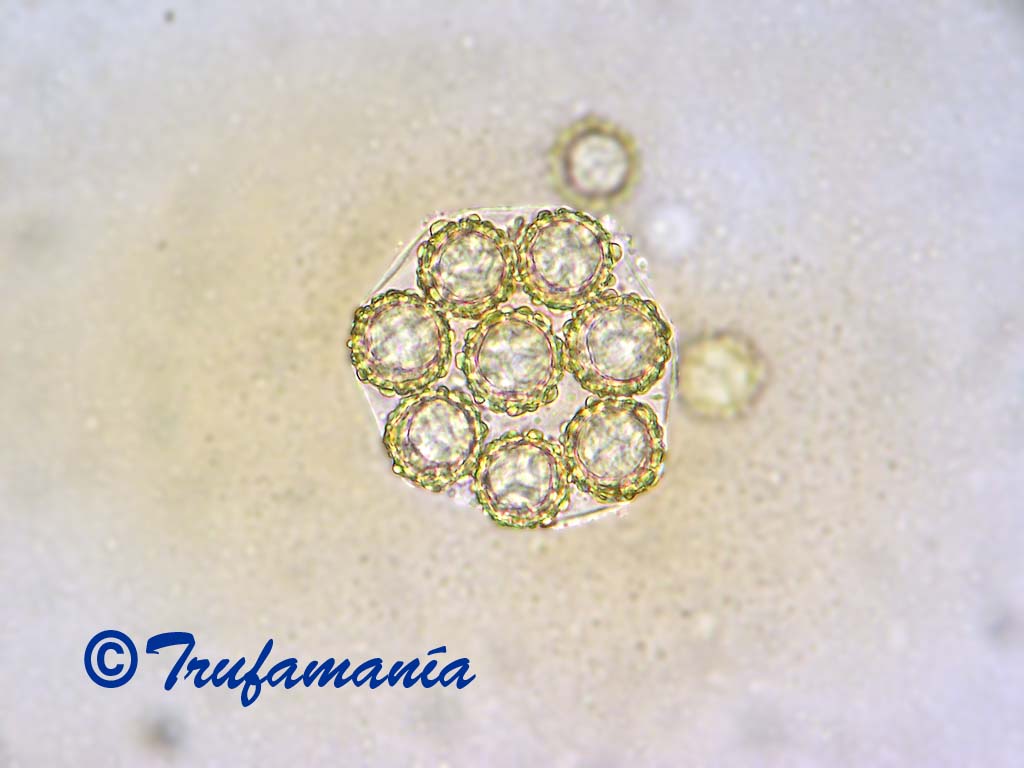
Asci: nonamyloid, subglobose to ovoid, pyriform, sessile, 70–100 x 50–70 µm, with 6–8 irregularly disposed spores, randomly arranged in fertile pockets.
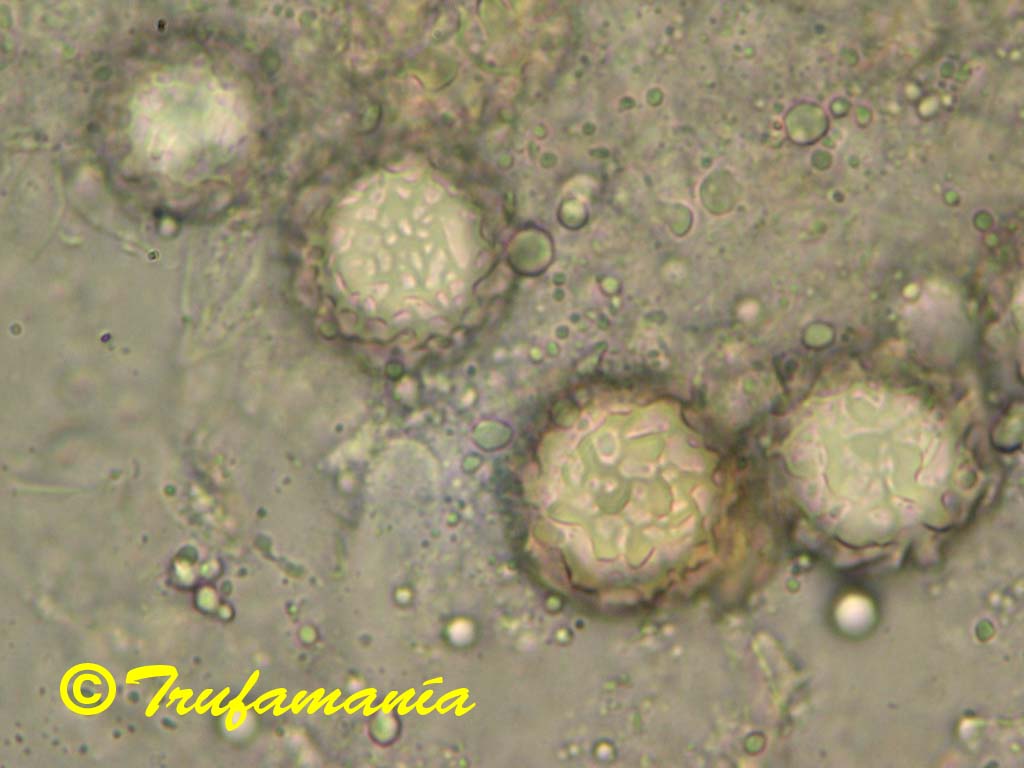
Ascospores: globose, (17–)18–21(–23) µm diam (median = 20 µm), including ornament, hyaline, smooth and uniguttulate at first, then yellow and ornamented with rounded, sometimes truncated warts, up to 2 µm tall and 2–3 µm broad at the base, forming an irregular, coarse reticulum, often incomplete, with variable height and thickness of the ridges; sometimes warts are very prominent and reticulum is inconspicuous in the light microscope.
Comments:
The most distinctive characters of Terfezia claveryi are: large size (some up to 400 g), reddish-brown colour, association with Helianthemum spp. in alkaline soils, and spores ornamented with rounded, sometimes truncated warts up to 2 µm tall, forming an irregular, more or less evident reticulum, often incomplete.
 |
Antonio Rodríguez trufamania@gmail.com antonio@trufamania.com ORCID iD: 0000-0002-0708-7773 |